
Designing Collective Memory Through Republic Day Performance
On Kartavya Path, Tableaux as Movable Heritage

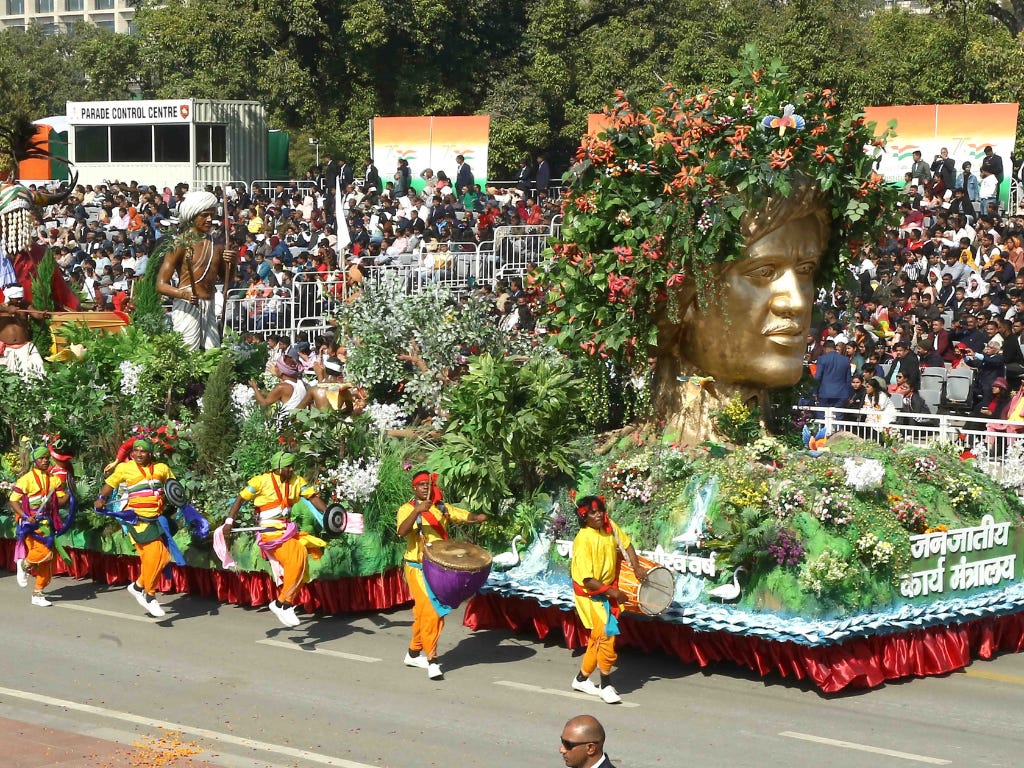
Every January 26, something extraordinary happens on a 3-kilometer stretch of red Bharatpur sandstone in the heart of Delhi. Our parade becomes a spatial performance wherein design becomes theatre. Motion becomes meaning. This year, thirty handcrafted tableaux again transformed into moving exhibitions of cultural memory.
National celebrations have their effect—they help us see what makes us the same rather than what makes us different. Getting up early in the morning, children across all ages, people of all demographics, assemble at Central Vista to witness the spectacle of the republic day parade. Ritually recurring—reconstructed every year, with new elements and enduring structures, reminding us of what we’ve been, what we are and what we’re building toward.
The Tableau as Vernacular Architecture
A Republic Day tableau can be seen as temporary architecture. Each float is a 30-40 foot moving structure—designed, engineered, assembled and dismantled within months. But unlike permanent buildings, tableaux must communicate instantly.
Look at the design constraints:
Material: Eco-friendly, lightweight, transportable
Time: 8-minute viewing window per spectator
Language: Visual only—minimal text, occasionally national logos
Scale: Must read from 100 meters away AND 5 meters away
Audience: Children to elders, local to international
Under these constraints, each tableau becomes an exercise in compressed storytelling. It’s architecture stripped to its semiotic essence—form, color, symbol, movement and sound. What semiotician Roland Barthes called “mythologies”—signs that carry entire systems of meaning. But here, the mythology performs itself.
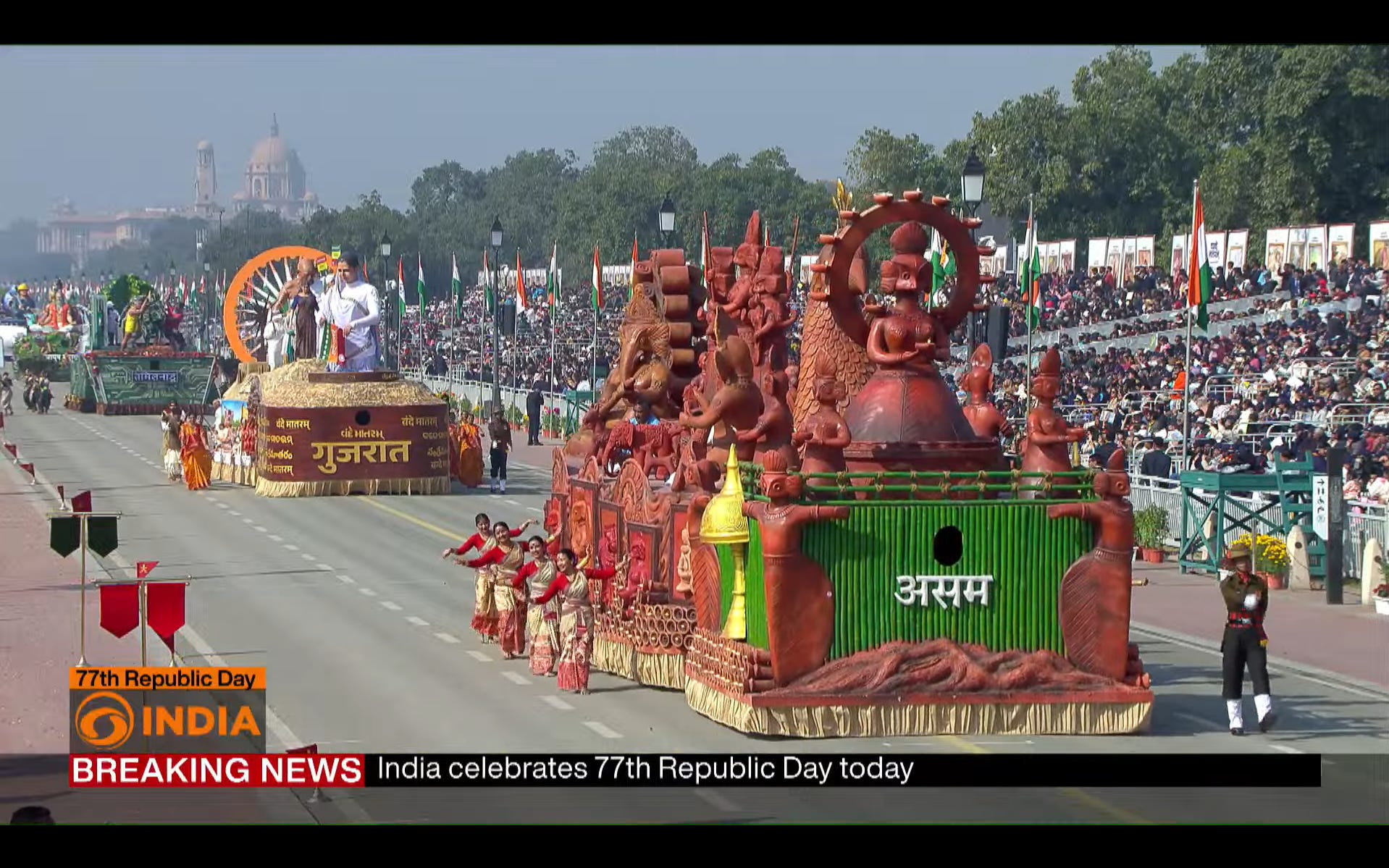
Take Assam’s Asharikandi—showcasing India’s largest and most renowned cluster of traditional terracotta artisans at work. Potters sit at wheels spinning, clay being molded in real-time. Imagine, witnessing living heritage architecture documented at this scale.
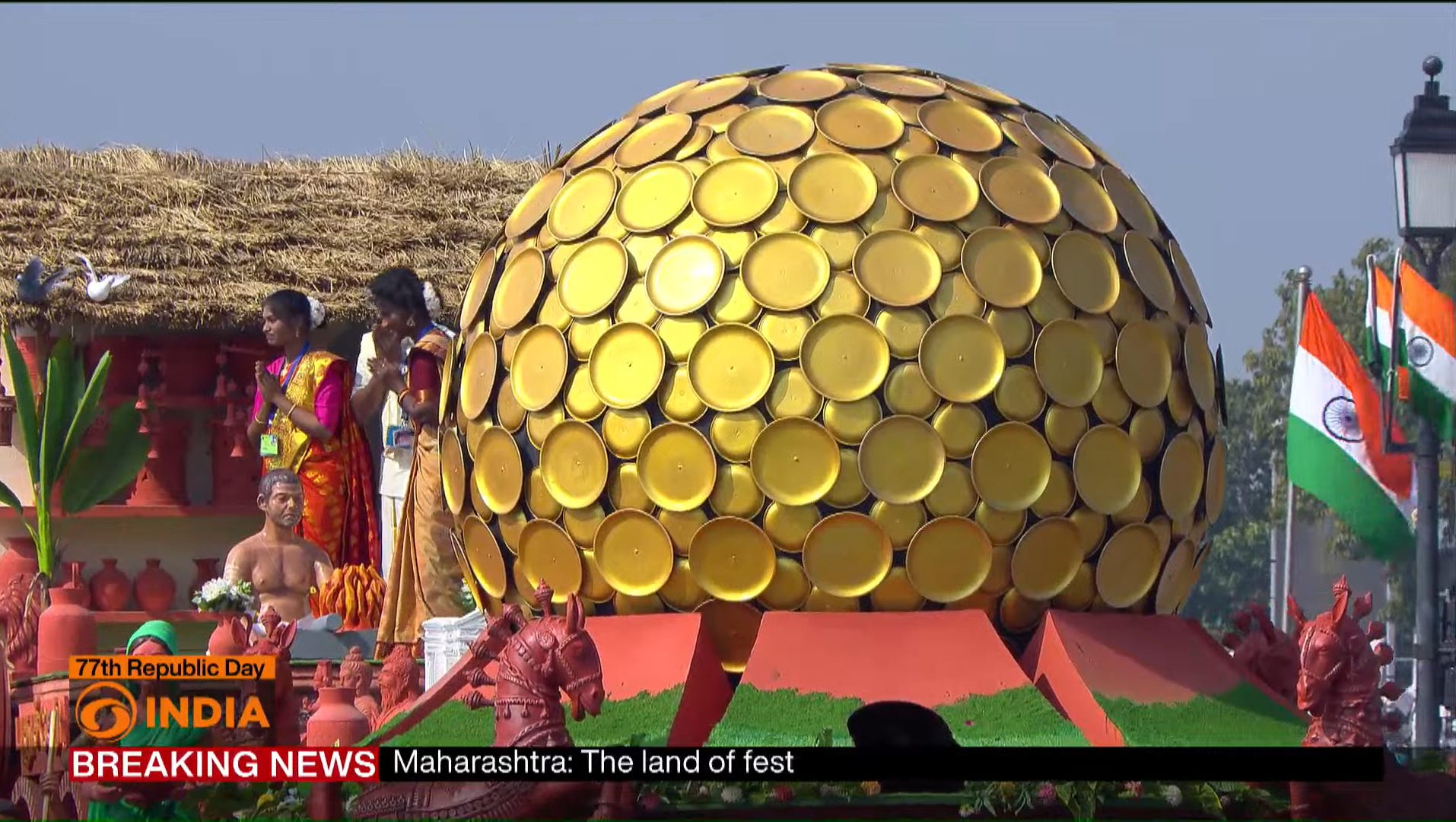
Puducherry’s tableau celebrated the Union Territory’s vibrant cultural heritage through terracotta art, pottery and sculpture, paying tribute to generations of skilled artisans while showcasing Auroville’s globally renowned vision. Featured prominently: the Matrimandir—a golden sphere designed by French architect Roger Anger as the spiritual heart of the community. Ancient craft traditions and utopian futures coexist on a single platform.
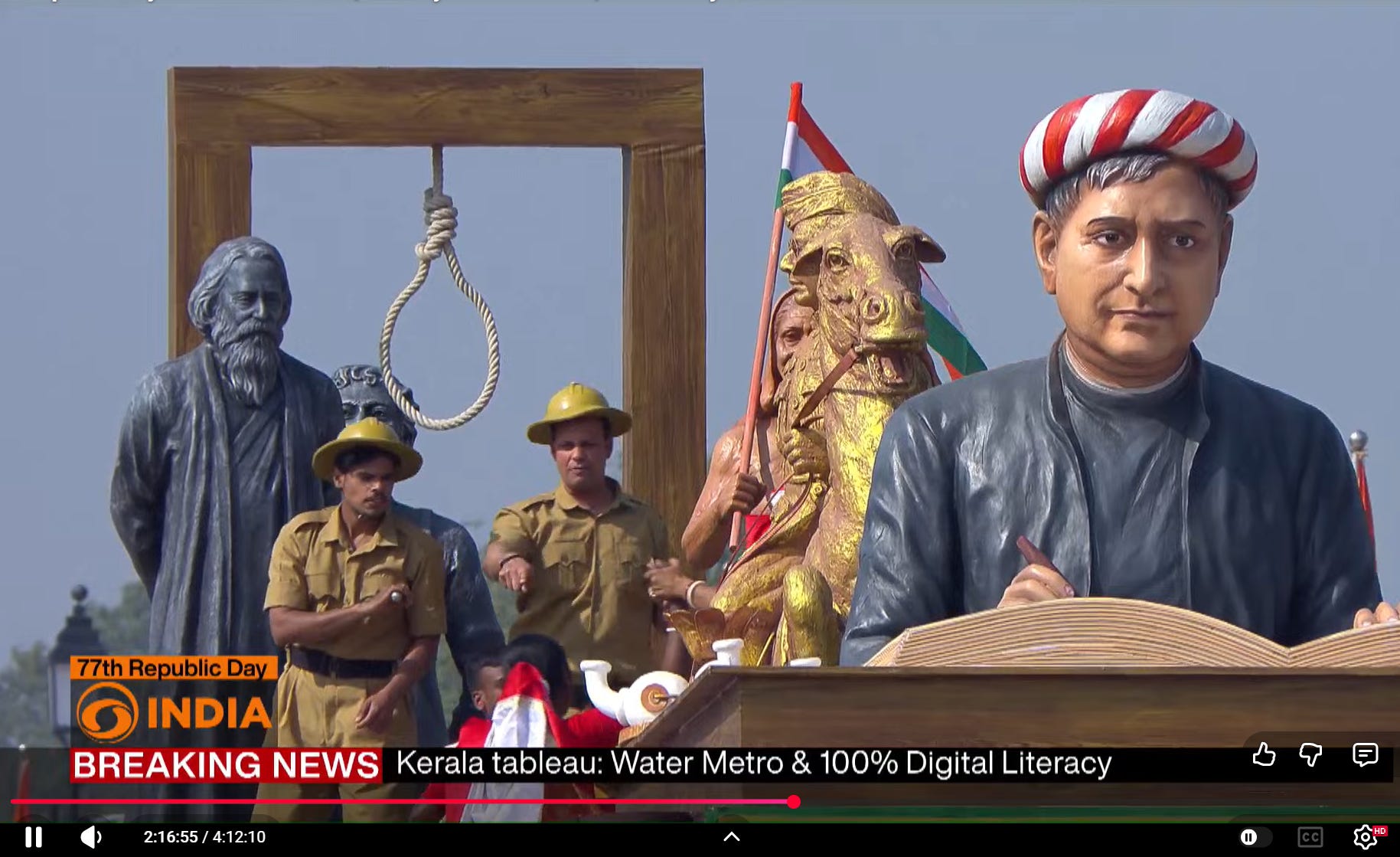
West Bengal’s “Bengal in the Freedom Movement” depicted Bankim Chandra Chattopadhyay and ‘Vande Mataram’ at the front, with Rabindranath Tagore and Khudiram Bose facing the gallows at the rear. The spatial composition positioned these figures dialogically—in conversation across time, creating what historian Pierre Nora calls lieux de mémoire (sites of memory)—not just representations but active agents of remembering.
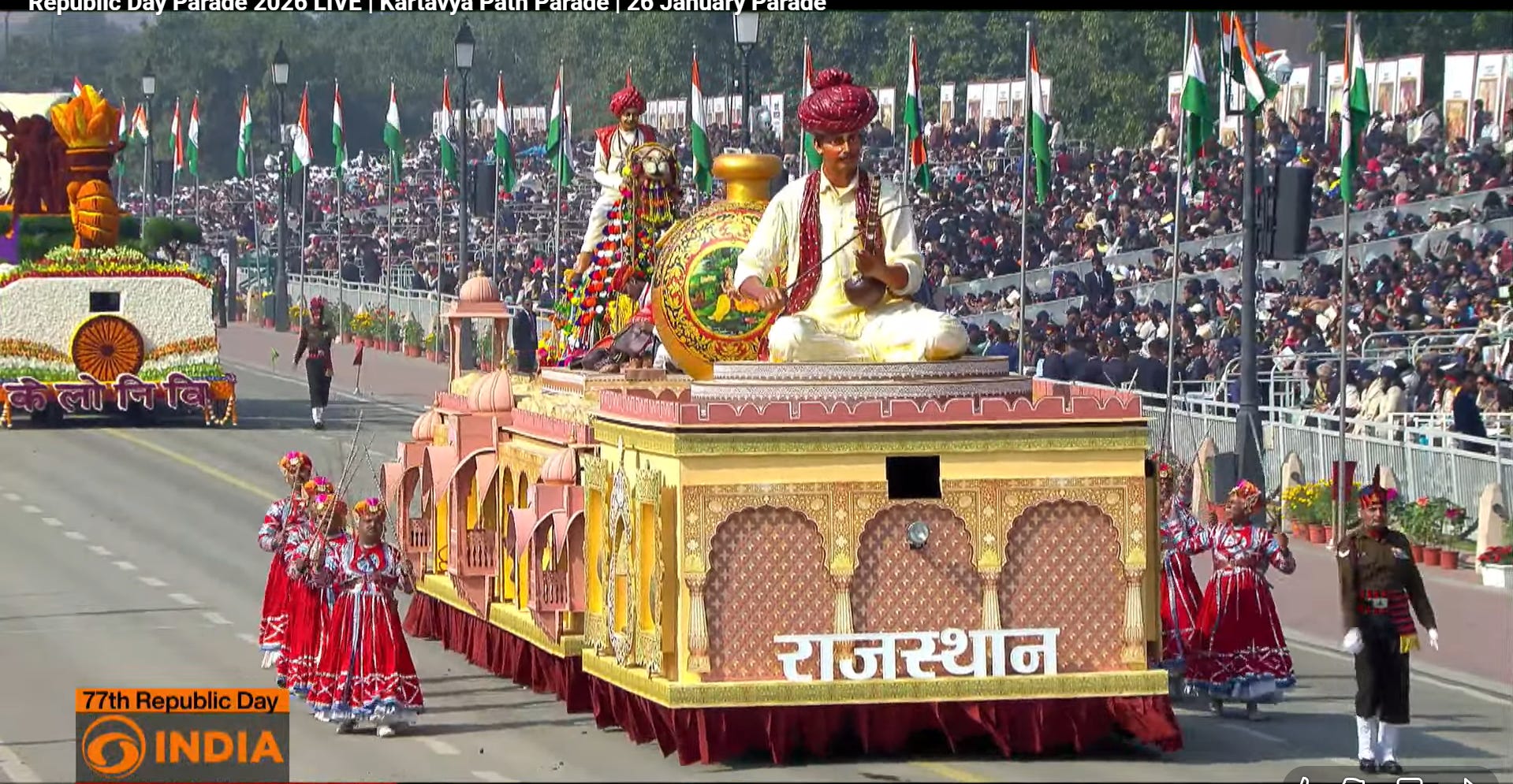
Rajasthan 2026: “Camel Hide and Golden Art”—celebrating Bikaner’s Usta art (gold inlay on camel leather). The tableau doesn’t just display the craft; it becomes the craft. The entire structure is a three-dimensional Usta artwork in motion, with artisans performing live. The boundary between representation and reality collapses. The medium becomes the message.
This is architecture as pedagogy—each tableau a 40-foot lesson in Indian culture that embodies.
The Design of Self-Reliance
What makes 2026’s tableaux remarkable is how they collapse the false binary between tradition and modernity, heritage and innovation. From 2024 onward, a 3-year rotation system ensures every state and UT participates at least once in three years—36 entities competing for approximately 15-17 state/UT slots per year.
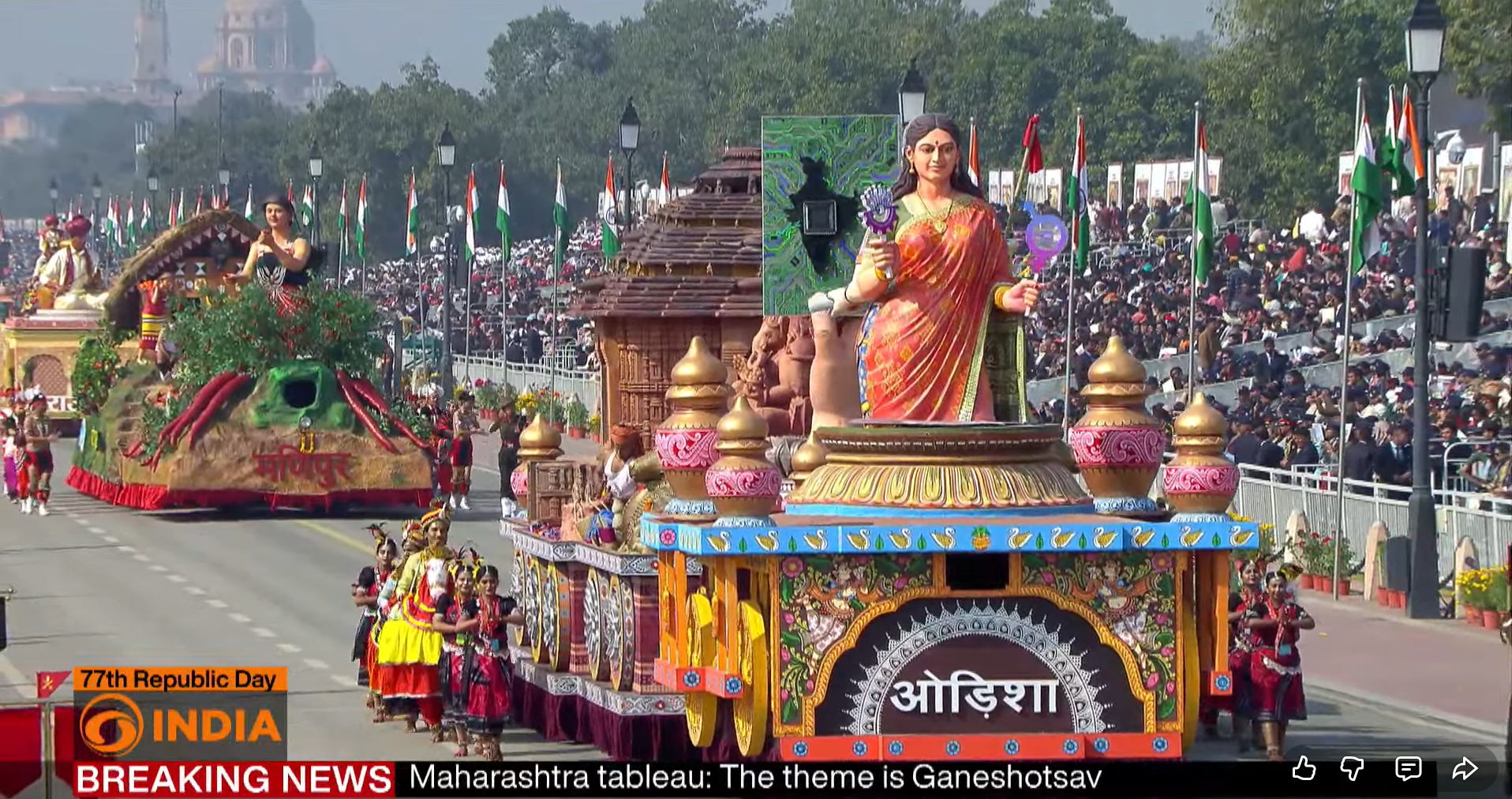
Odisha’s tableau traces this journey perfectly. At the front, women-led inclusive participation symbolizes equitable development. At the center, a hand holding a semiconductor chip represents Odisha’s emergence as a technological hub. Opposite this stands Koraput coffee—sustainable livelihoods, tribal empowerment, indigenous agriculture. Live demonstrations of handloom weaving and handicrafts showcase artisanal resilience. The rear features the Konark Sun Temple. Timeless artistic legacy meeting cutting-edge semiconductor manufacturing on a single 40-foot platform.
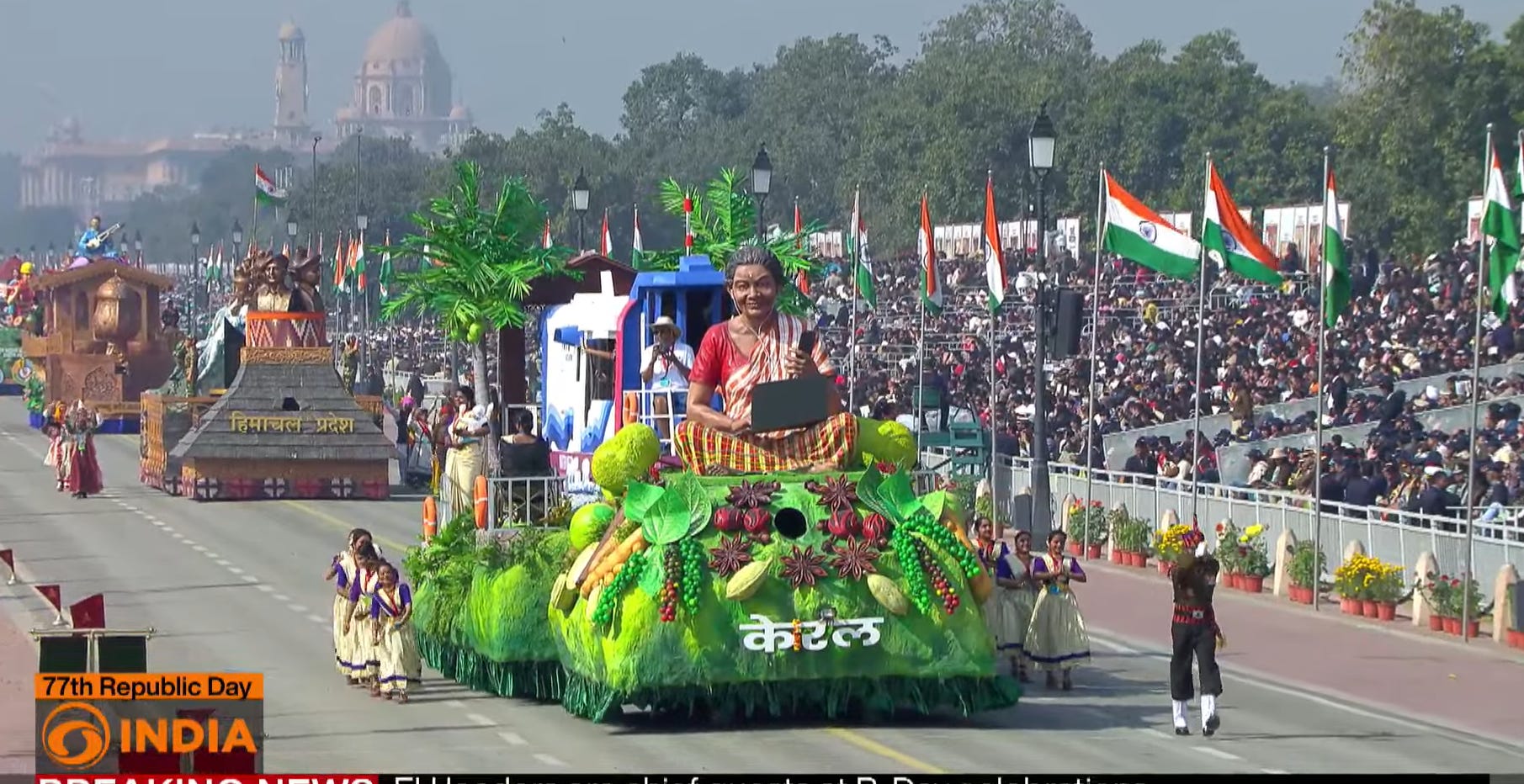
Kerala’s tableau presents India’s first Water Metro alongside 100% digital literacy achievement. An effigy of Saraswathi from Pullampara stands as the digital literacy brand ambassador—grassroots empowerment embodied against a rural landscape. Infrastructure innovation and social transformation rendered as spatial narrative.
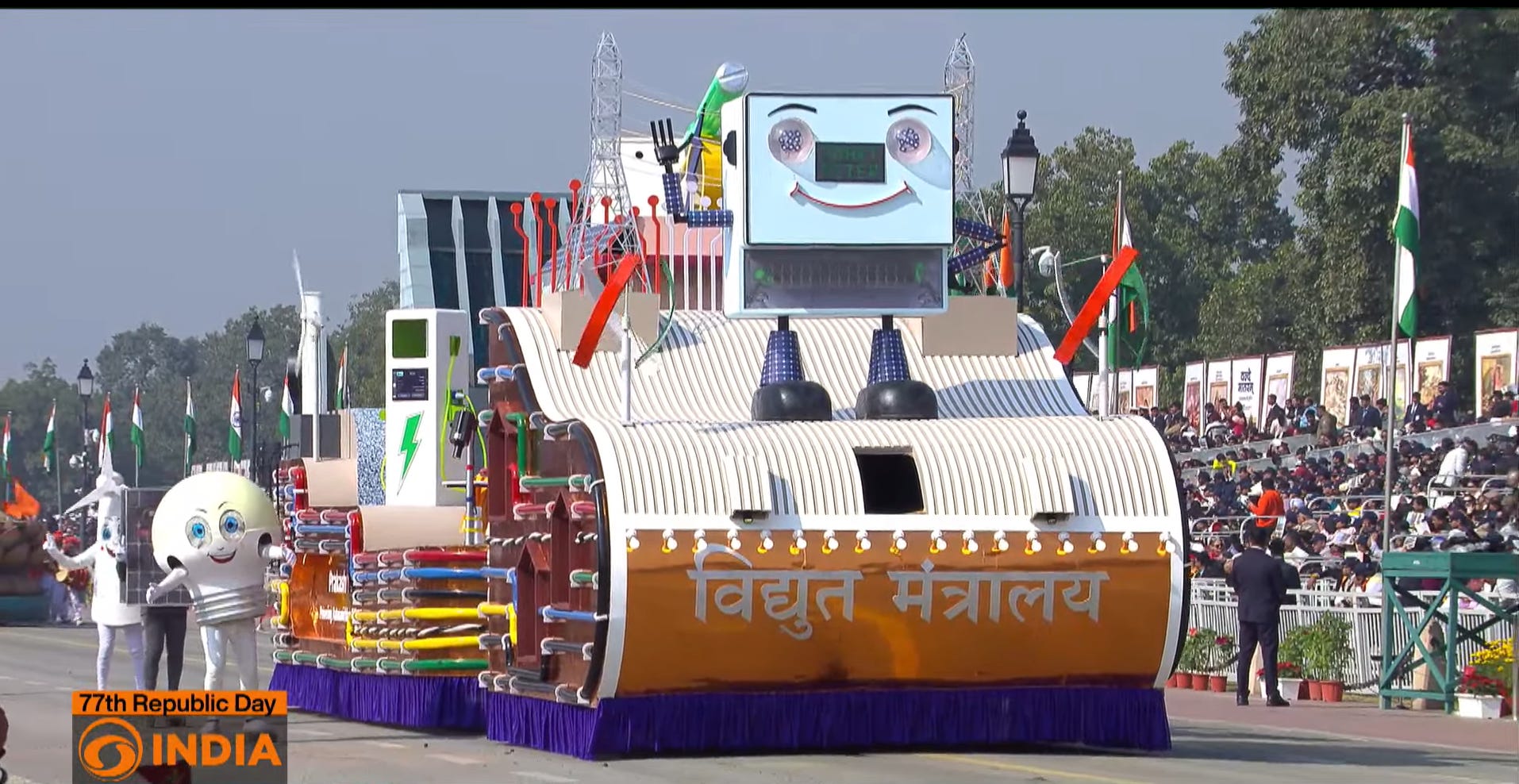
Ministry of Power’s “Prakash Ganga” (River of Light) symbolizes the seamless flow of electricity through India’s integrated national power grid, presenting the transformative journey toward a sustainable, digital, and reliable ecosystem. “Switching on India” represents advanced grid monitoring, automation, and real-time control systems. Not just displaying technology, but making energy infrastructure visible, tangible, felt.
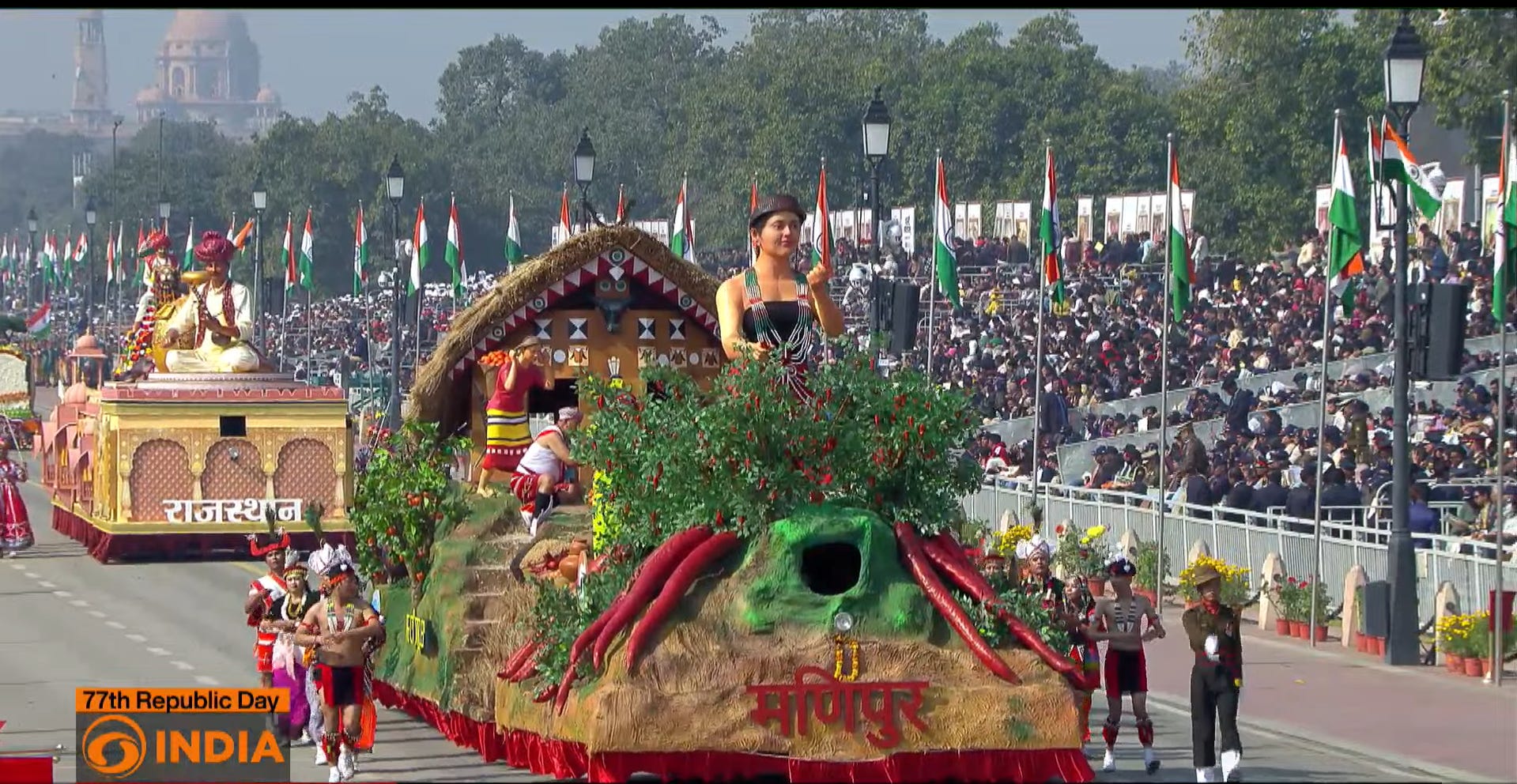
Manipur’s tableau portrays the journey from traditional agricultural fields to international markets through GI-tagged products. A woman in traditional attire harvests the vibrant Sirarakhong Hathei chilli from Ukhrul hills—grassroots empowerment and women’s agricultural participation. The center depicts traditional threshing and winnowing of Chak-Hao, Manipur’s aromatic black rice. The rear showcases Tamenglong Orange against a traditional Taraeng-Kai house. Indigenous knowledge becomes a global commodity without losing local identity.
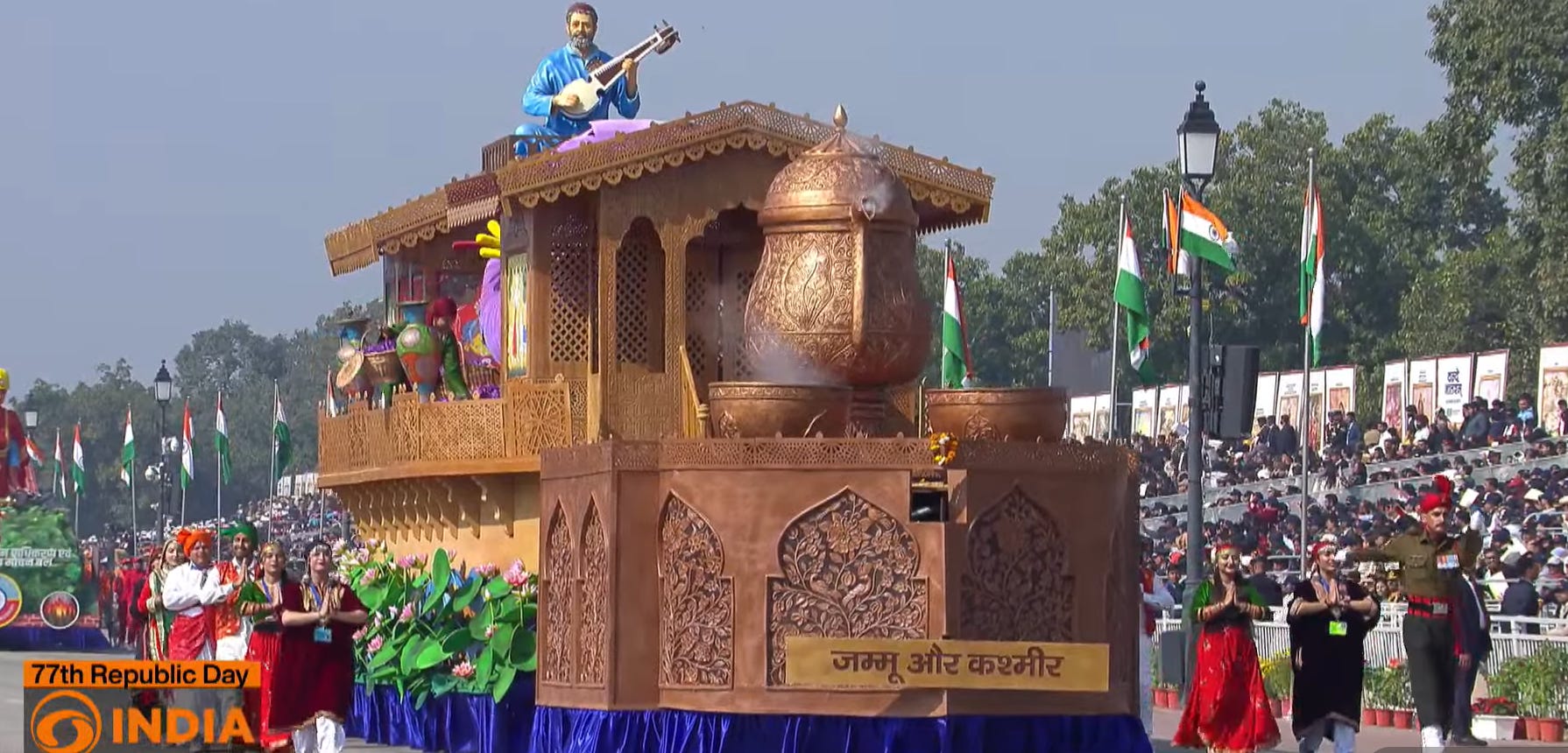
Jammu Kashmir’s tableau—handicrafts unfolding like a silken tapestry, a seamless cultural continuum forming a single luminous narrative. Gleaming samovars with intricate metal engraving, exquisitely woven Kani shawls rich with symbolic patterns, hand-knotted carpets rising from looms in geometric harmony, carved walnut-wood artefacts. Cultural richness not as museum exhibits but as living practice.
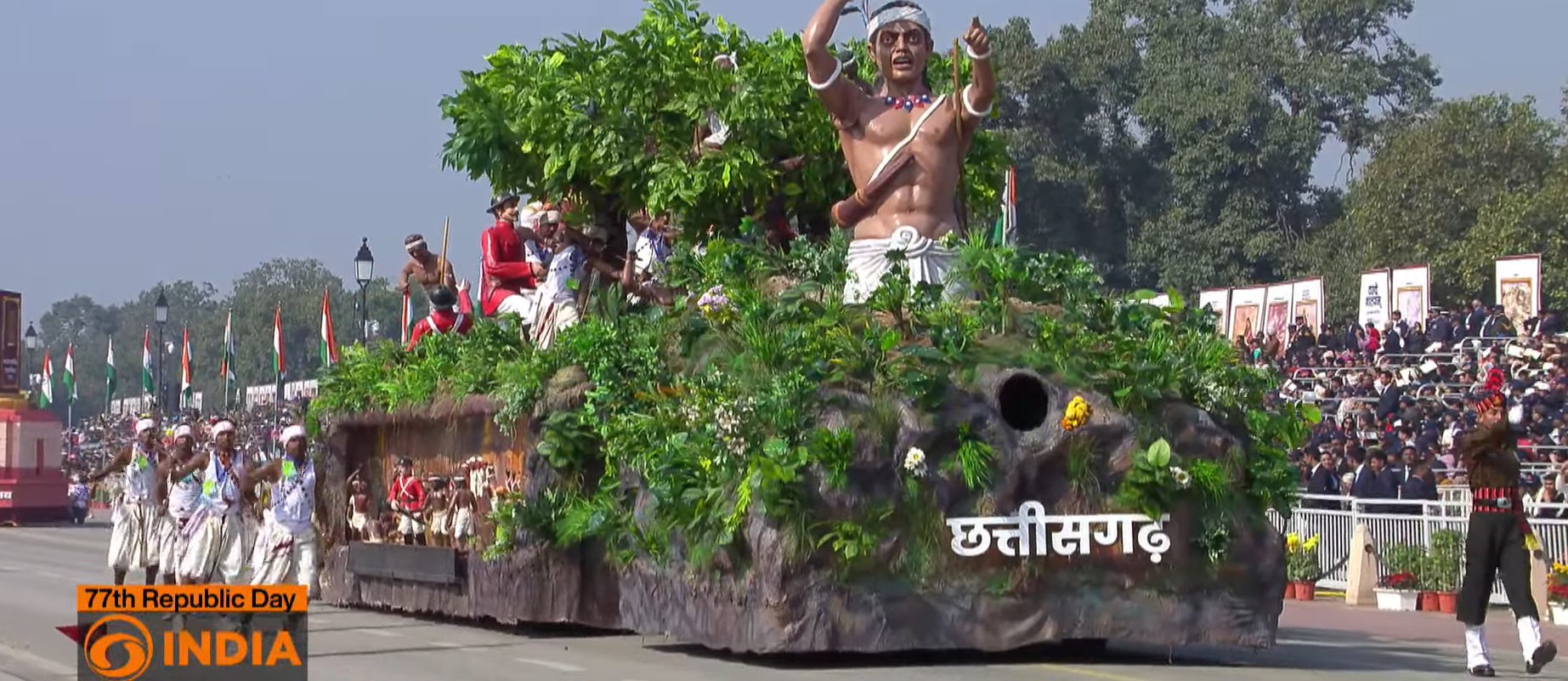
Chhattisgarh showcases India’s first digital museum honoring tribal heroes of the freedom struggle. At the front stands Veer Gundadhur, legendary leader of the Dhurwa community and face of the 1910 Bhumkal Rebellion—meaning collective assembly against injustice. Heritage preservation through cutting-edge technology, tribal resistance through digital memory.
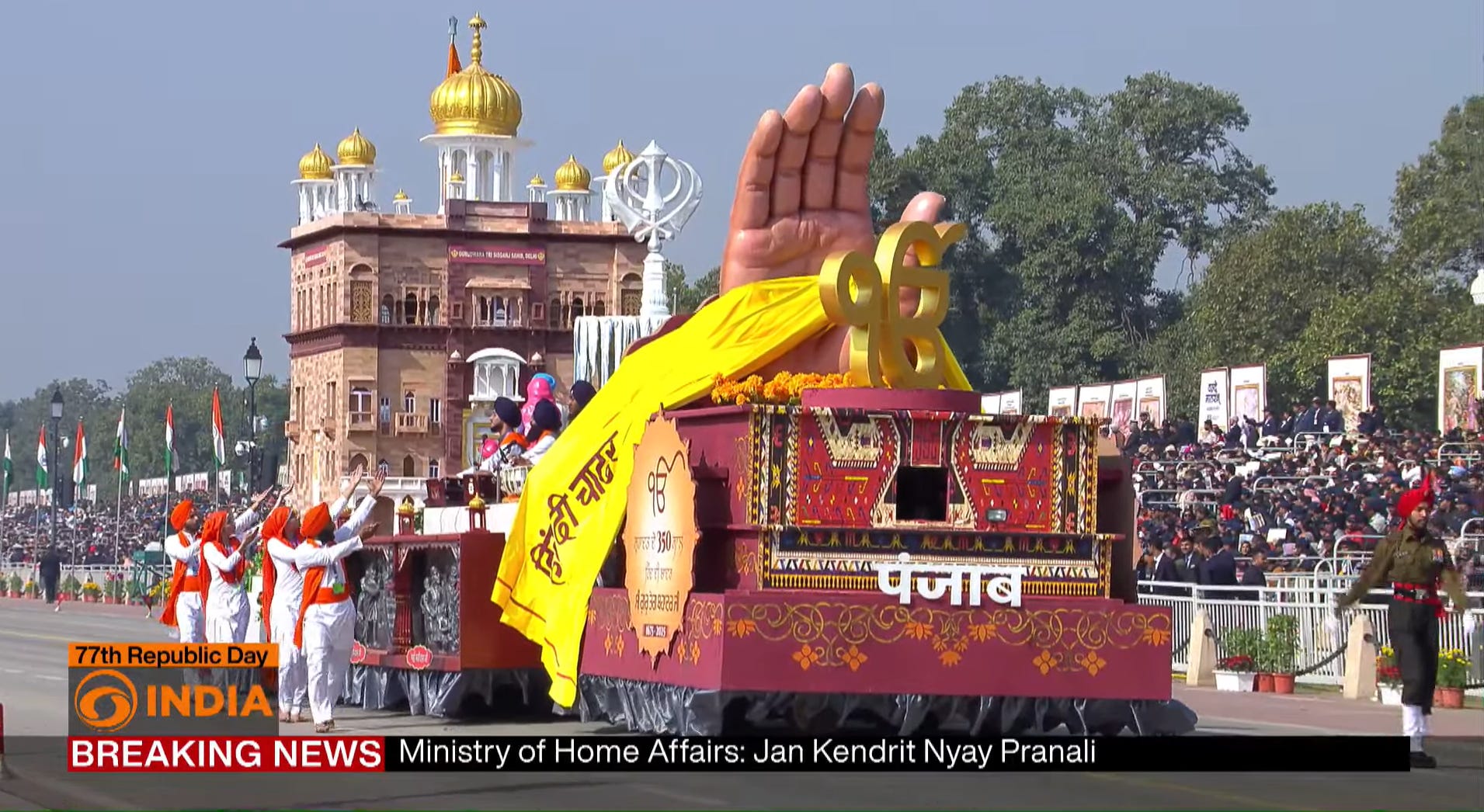
Punjab’s tableau commemorates the 350th year of Guru Tegh Bahadur’s martyrdom. At the forefront appears the celestial inscription “Ek Onkar” (God is One) in revolving form, conveying eternal truth upheld by Sikh philosophy. The Guru revered as protector of human conscience, faith, and freedom—supreme sacrifice for religious liberty rendered as spatial devotion.
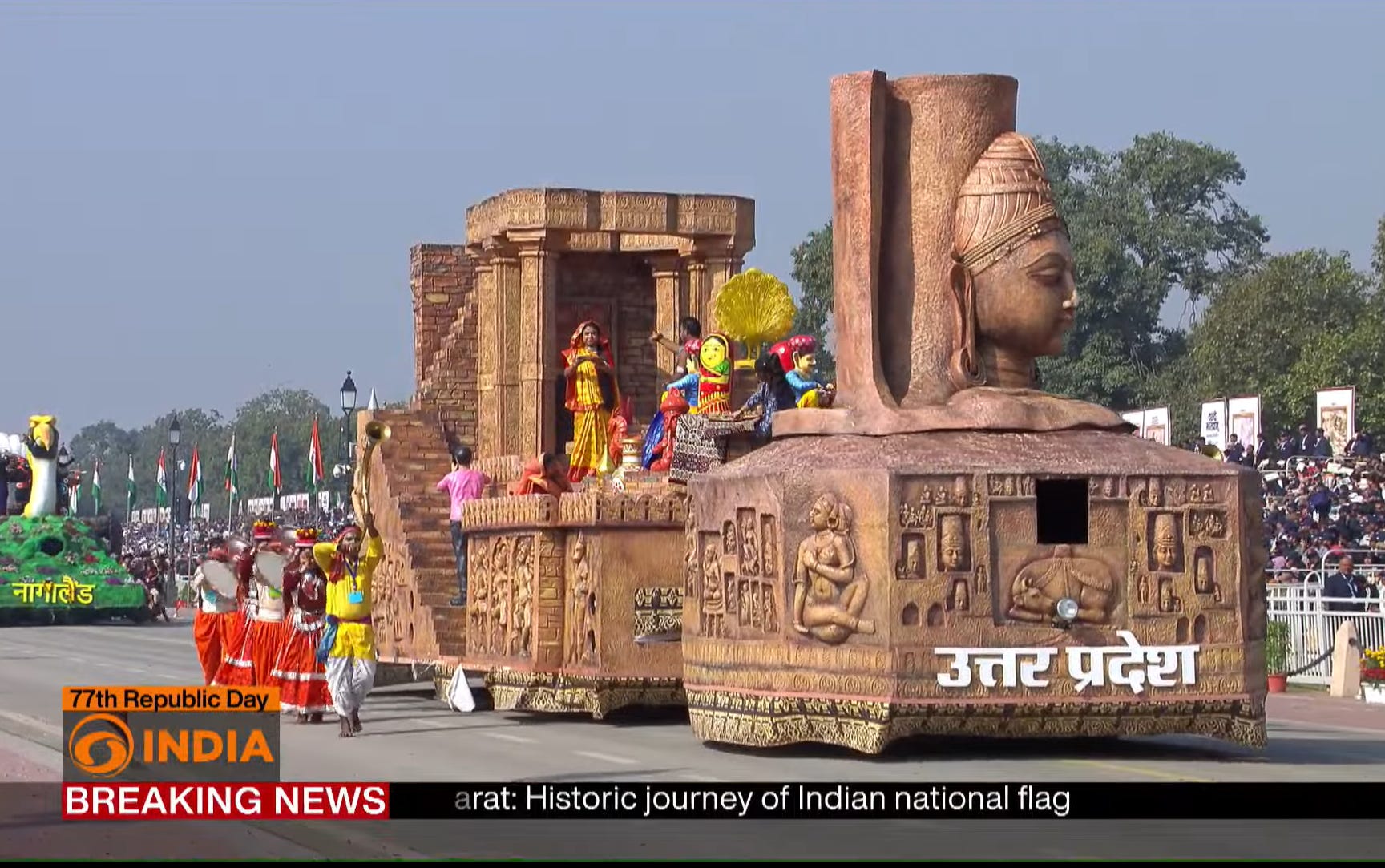
Uttar Pradesh presents the timeless grandeur of Bundelkhand, with the Ekamukha Linga—one of the most celebrated rock-cut sculptures of Kalinjar—at the front, symbolizing deep spiritual roots and extraordinary architectural heritage, seamlessly blending ancient legacy with the state’s dynamic vision.
Using India’s deep cultural and agricultural archive, these become attempts to celebrate what we might call vernacular modernism—constructing contemporary pathways to self-reliance that are recognizably rooted without being static, refusing the colonial logic that modernity must mean placelessness.
The Social Architecture of Inclusion
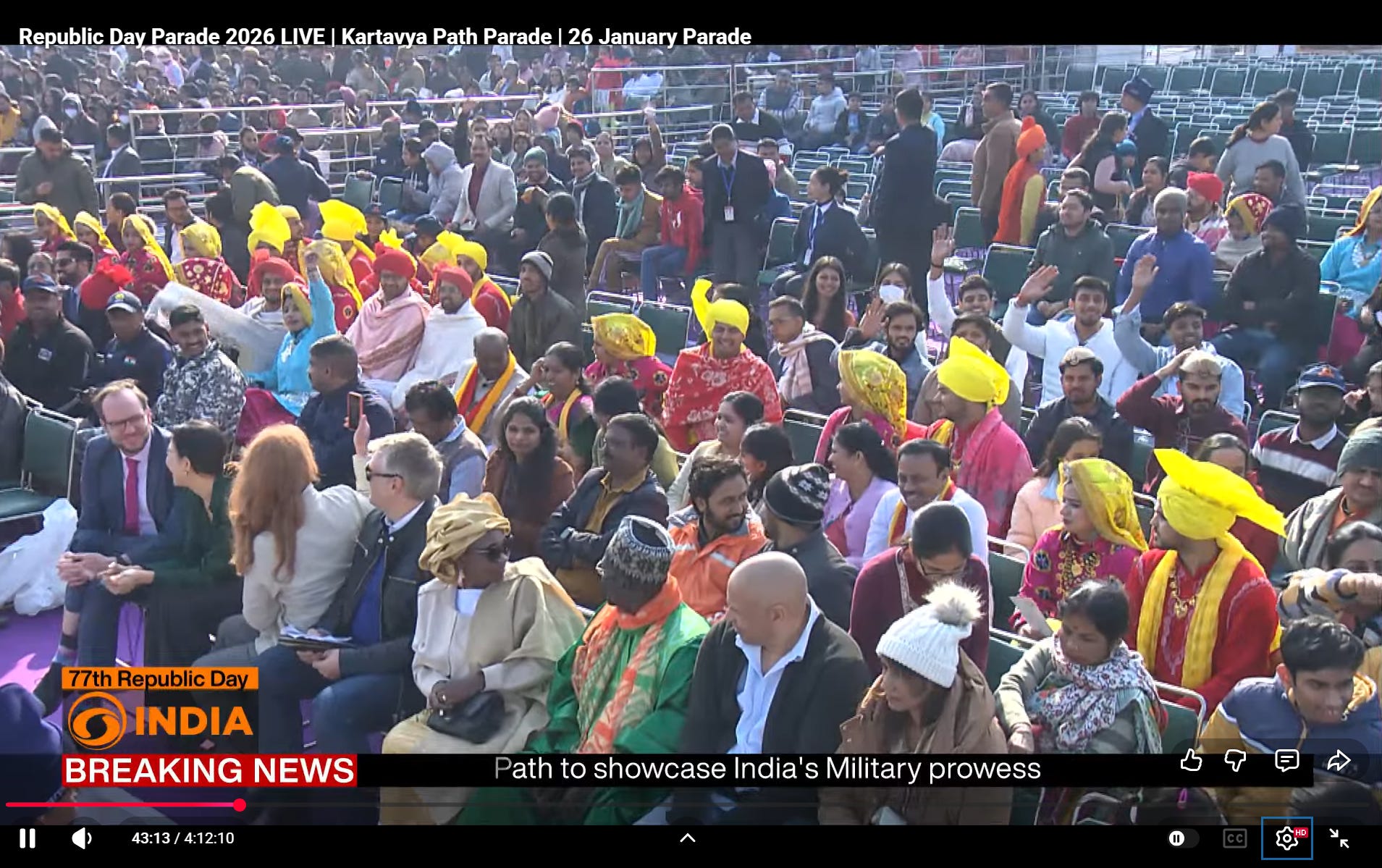
This year, 10,000 people who would never typically access elite state ceremonies sit prominently at Kartavya Path: farmers practicing natural farming, transgender persons rehabilitated under PM SMILE, ISRO scientists from Chandrayaan missions, tribal leaders, Lakhpati Didis (women entrepreneurs), street vendors under PM SVANidhi, construction workers from Border Roads Organization, Buddhist monks from Global Buddhist Summit, Anganwadi workers, biotech startup founders, disabled athletes, beneficiaries of National Minorities Development Corporation.
The enclosures where they sit are named after India’s rivers: Ganga, Brahmaputra, Kaveri, Godavari, Sindhu, Yamuna, Teesta and Chenab. Rivers don’t recognize state boundaries, religious identities, or caste hierarchies. They flow through Jammu and Tamil Nadu, Assam and Gujarat, connecting disparate geographies. Guests were sitting in traditional and ceremonial attire—their color and elegance reflecting many regions and cultures, states and union territories. Distinctive yet unified, they symbolized the diversity that lies at the heart of India’s identity. The central vista becomes a large canvas where every community finds representation.
The Design Language of Republic Day 2026
The visual language:
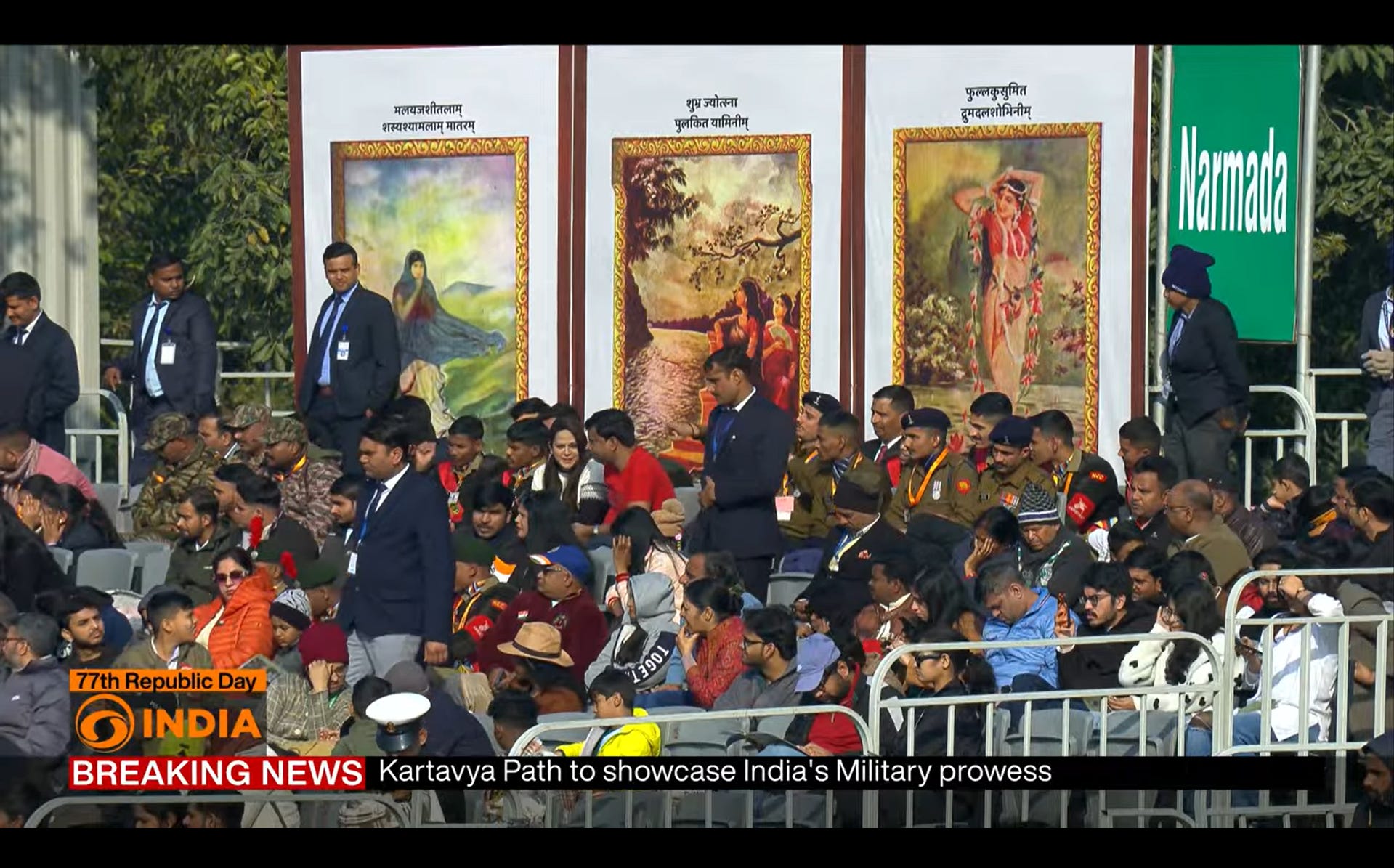
Tejendra Kumar Mitra’s 1923 paintings illustrating Vande Mataram verses as view-cutters along Kartavya Path,
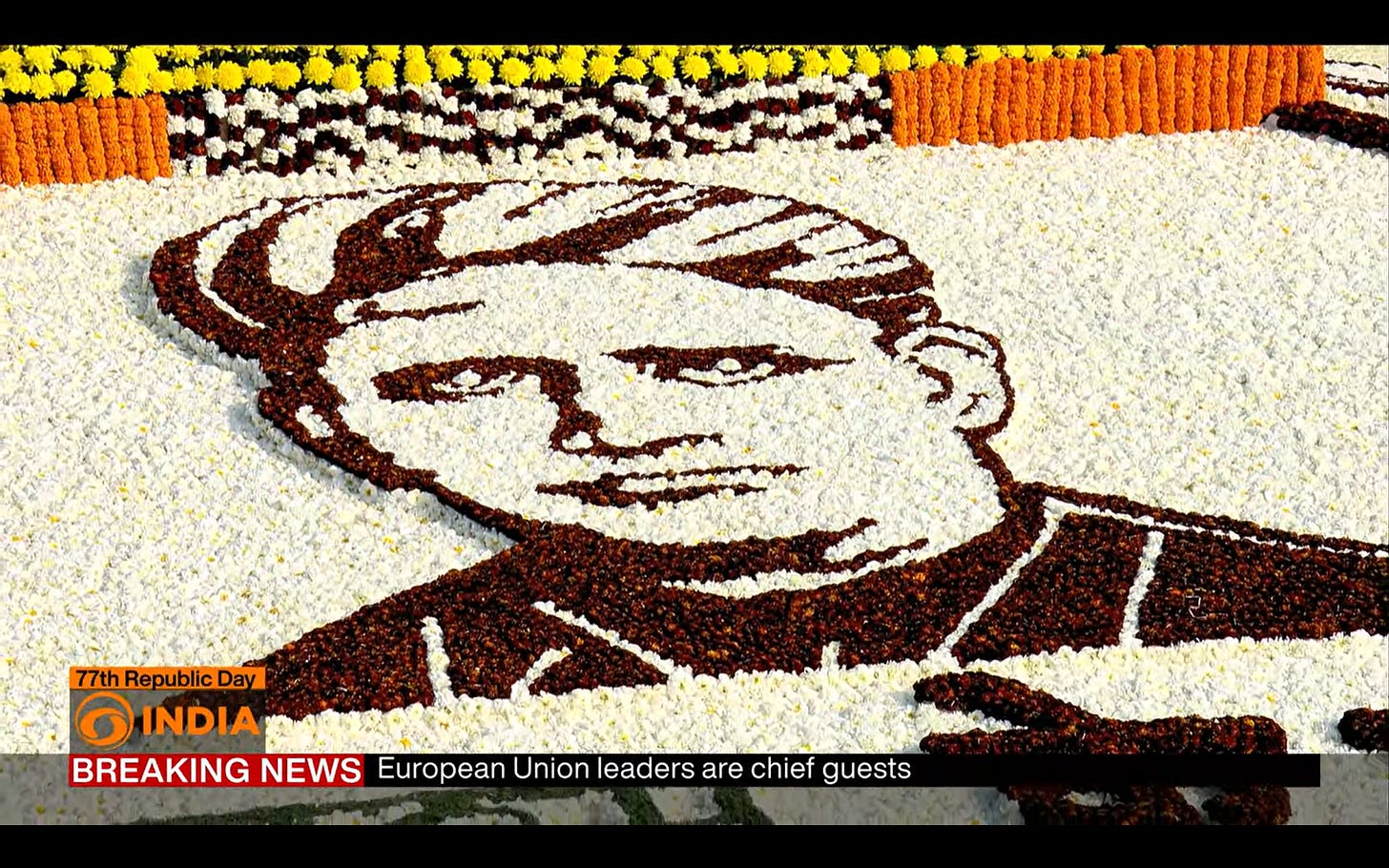
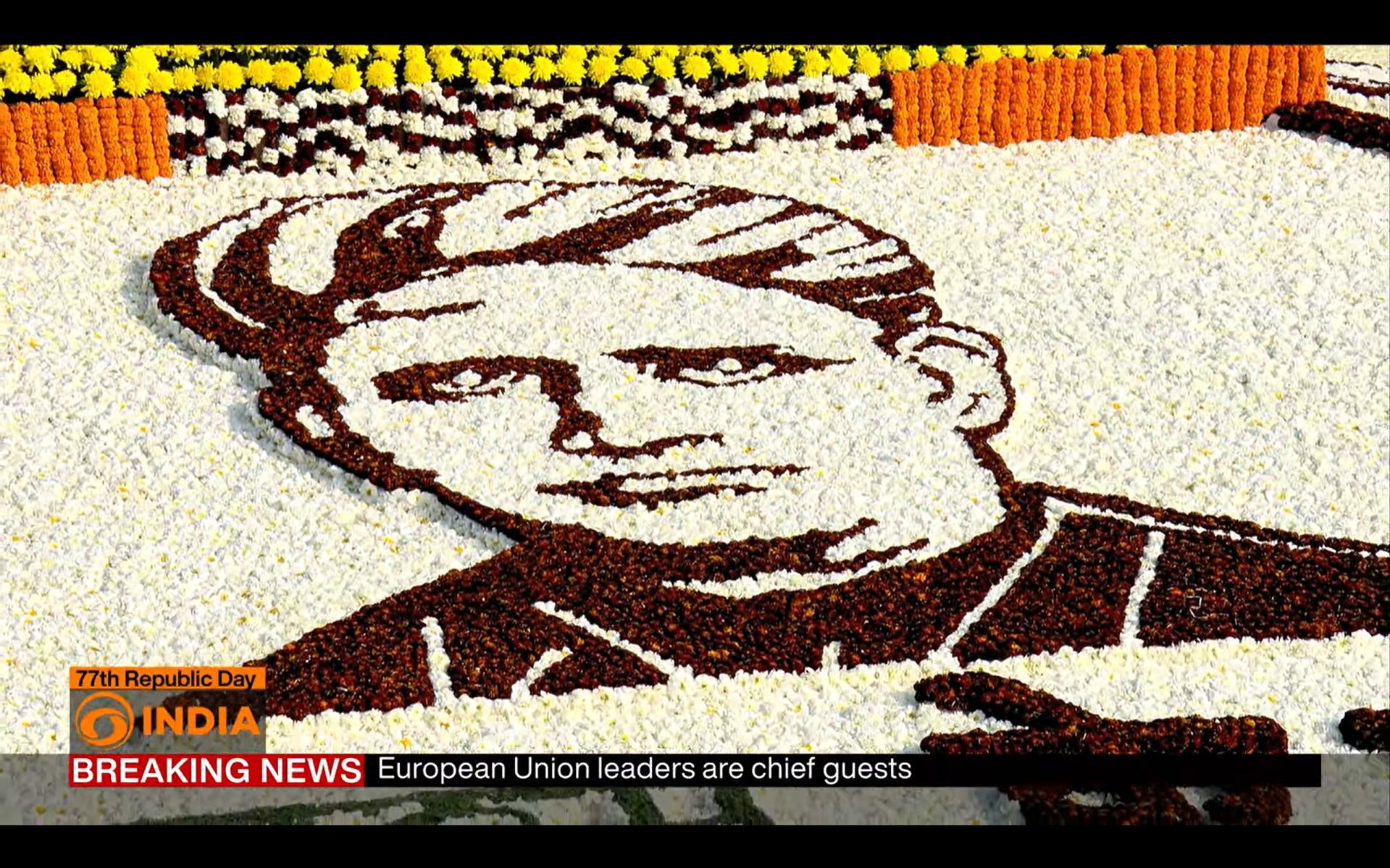
floral decorations based on Vande Mataram theme, invitation cards designed around freedom struggle imagery, enclosure names for Beating Retreat after Indian musical instruments (Sitar, Tabla, Bansuri, Sarangi), tableaux color palette using eco-friendly materials in vibrant, regionally-specific hues.
Compare this to colonial visual language: Lutyens’ architecture used Greek, Roman, Buddhist, and Mughal motifs to create what he called “timeless” design—meaning deliberately placeless, a universalism that erased local identity. The 2026 design language does the opposite: it is hyper-local (Bikaner’s Usta art, Manipur’s Hornbill Festival, Assam’s terracotta, Odisha’s Koraput coffee, Kerala’s Water Metro) assembled into a national collage. Unity through diversity, achieved through design, not decree.
The Politics of Civic Performance
Public space is political space. How we design our most important civic ceremonies shapes collective consciousness.
When 2,500 cultural performers (with M.M. Keeravani’s music, Anupam Kher’s narration, Santosh Nair’s choreography) perform on Kartavya Path, they’re enacting the republic. Making it visible. Tangible. Felt.
When 18,013 schoolchildren from 763 school bands across 33 states compete in the National School Band Competition, and the winners perform at the parade, that’s civic participation. Teaching children that the republic is not a distant abstraction, but something they can literally compose.
The story this parade tells is of a nation in process. Progressing, building and celebrating how it continues to hold a billion contradictions together without collapsing.